Super Early
Deadline
December 22, 2026
Judging
Date
July 26, 2027
Winners
Announced
August 12, 2027
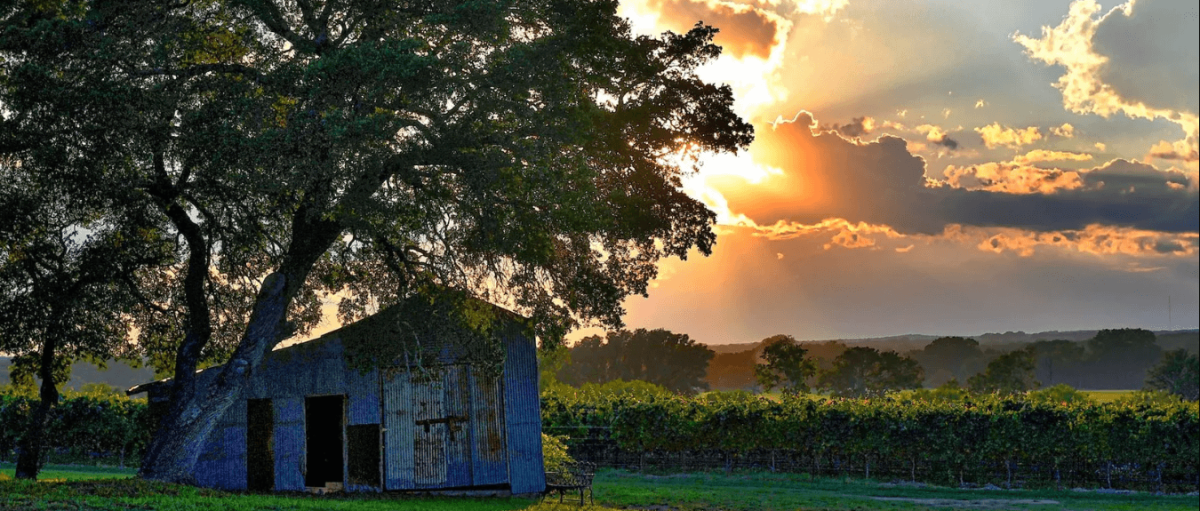
For decades, American wine revolved around a predictable map. Napa Valley symbolized luxury, Sonoma represented approachable sophistication, and Oregon’s Willamette Valley became the benchmark for cool-climate wines. Restaurant lists, collectors, and tourism campaigns reinforced the idea that serious American wine could only come from a few elite West Coast regions. Today, that hierarchy is shifting rapidly as climate pressures, rising land prices, and changing consumer tastes push winemakers toward overlooked parts of the country. Wildfires, drought, smoke taint, and extreme heat are making traditional California viticulture increasingly expensive and unpredictable. At the same time, warming temperatures are improving conditions in cooler states that once struggled to consistently ripen grapes. Regions in New York, Michigan, Idaho, Colorado, Texas, and Arizona are benefiting from longer growing seasons, cooler nights, volcanic soils, and high-altitude climates that preserve acidity and freshness.
Consumer behavior is changing as well. Younger drinkers are less loyal to legacy luxury brands and more interested in sustainability, low-intervention winemaking, and regional identity. Instead of defaulting to Napa Cabernet Sauvignon, many are exploring Rieslings from the Finger Lakes AVA, Tempranillo from Texas Hill Country AVA, sparkling wines from Michigan’s Old Mission Peninsula AVA, or Rhône blends from Idaho’s Snake River Valley AVA. Napa still dominates the luxury market, but the future of American wine is becoming far more decentralized.
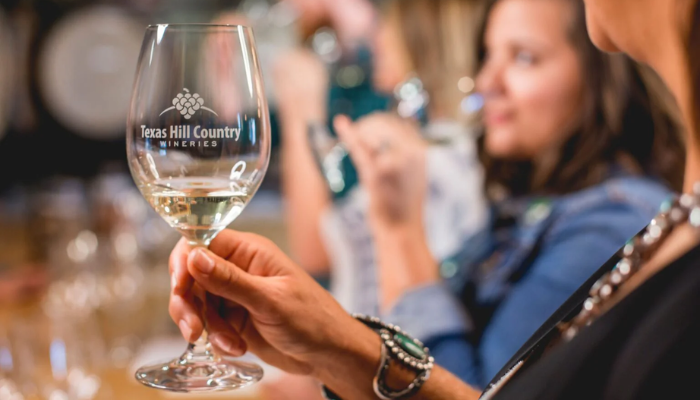
Source: Texas Hill Country Wineries
Texas wine has evolved far beyond novelty status. The Texas Hill Country AVA is now one of the country’s fastest-growing wine tourism destinations, while the Texas High Plains AVA has become essential for quality grape production because of its cooler nighttime temperatures and higher elevations. Rather than imitating Napa Valley, many Texas producers are embracing grape varieties naturally suited to extreme heat. Tempranillo has become the unofficial flagship, while Mourvèdre, Grenache, Tannat, Viognier, and Vermentino are gaining traction. Wineries such as Becker Vineyards, William Chris Vineyards, Duchman Family Winery, Pedernales Cellars, and Bending Branch Winery are helping shape a distinctly Texan wine identity rooted in Mediterranean varieties rather than Bordeaux imitation. New sub-regional proposals, such as the Hickory Sands District and the Llano Uplift, reflect the state’s growing confidence in its own terroir distinctions. Water scarcity and extreme summer temperatures remain serious long-term challenges, but many Texas winemakers argue that those conditions encourage experimentation and adaptation rather than conformity.
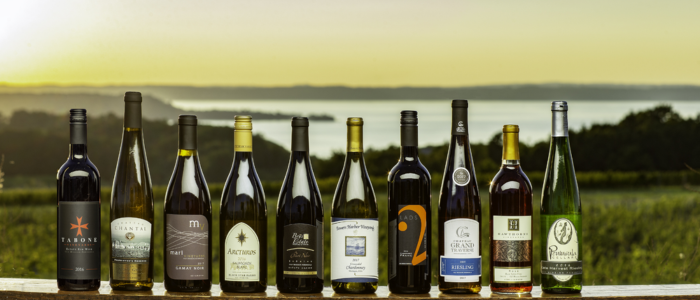
Source: West Michigan Tourist Association
Michigan has quietly become one of America’s most intriguing wine states. The Leelanau Peninsula AVA and Old Mission Peninsula AVA, both near Traverse City, benefit from the moderating influence of Lake Michigan, which reduces frost risk and extends the growing season. As temperatures gradually warm, Michigan is entering a climatic sweet spot where grapes ripen more consistently while maintaining the cool conditions necessary for balance and acidity. Producers such as Mari Vineyards, Black Star Farms, Chateau Chantal, Left Foot Charley, Brys Estate Vineyard & Winery, and Mawby Vineyards are producing increasingly sophisticated Pinot Noir, Chardonnay, Riesling, and sparkling wines.
Sparkling wine may become the state’s defining category. Mawby, in particular, has demonstrated how Michigan’s bright acidity and moderate alcohol levels can produce elegant sparkling wines comparable to cooler European regions. The Fennville AVA in southwestern Michigan is also gaining recognition for aromatic whites and cool-climate reds. Beyond wine, tourism is transforming the region. Traverse City has evolved into a major culinary destination filled with boutique hotels, restaurants, and tasting rooms that attract travelers looking for an alternative to California wine country.
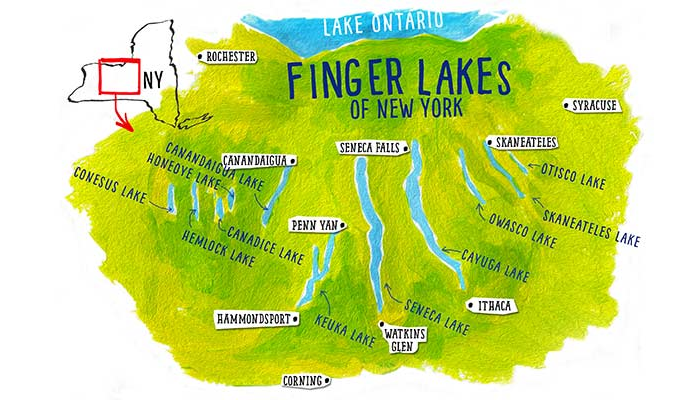
Source: Exploring the Wine Glass
Few regions have gained credibility faster than New York’s Finger Lakes AVA. Once known mostly for inexpensive sweet wines, the region is now producing some of America’s most respected cool-climate whites. Deep glacial lakes, including Seneca Lake, Cayuga Lake, and Keuka Lake, moderate temperatures, and extend the growing season, allowing grapes to ripen while retaining sharp acidity. Riesling has become the region’s signature grape, with producers such as Dr. Konstantin Frank Winery, Hermann J. Wiemer Vineyard, Ravines Wine Cellars, Forge Cellars, and Boundary Breaks crafting mineral-driven wines often compared to bottles from Germany and Alsace. Cabernet Franc and sparkling wines are also improving rapidly as warmer vintages create more consistent ripening conditions. The Finger Lakes have also become a center for low-intervention winemaking. Producers, including Osmote Wine, Apollo’s Praise, and Living Roots Wine & Co., appeal to younger consumers looking for authenticity rather than prestige branding. More importantly, the region demonstrates how climate change is creating opportunities in areas once considered too cold for premium viticulture.
Source: Southwest Idaho Travel Association
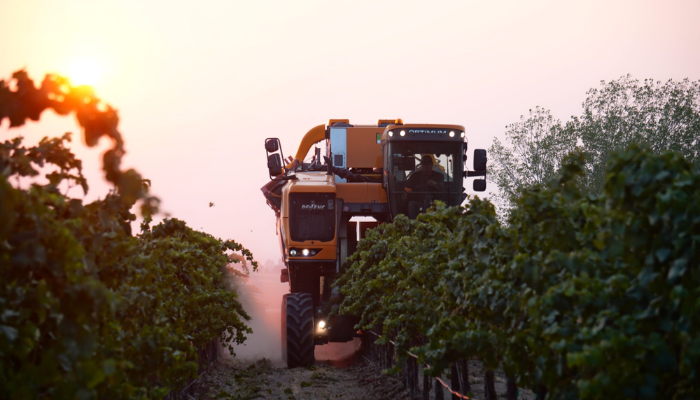
Idaho still surprises many wine drinkers, but the Snake River Valley AVA has quietly become one of America’s most promising emerging wine regions. The high-desert climate combines volcanic soils, intense sunlight, low humidity, and dramatic day-to-night temperature swings that preserve freshness while allowing full ripening. The region is often compared to eastern Washington, although lower land prices and fewer institutional expectations have encouraged experimentation; for example, producers such as Ste. Chapelle, Sawtooth Winery, Koenig Vineyards, Cinder Wines, Telaya Wine Co., and Huston Vineyards are defining Idaho through Syrah, Cabernet Franc, Riesling, and Rhône-style blends.
Cabernet Franc performs particularly well because warm days encourage ripening while cool nights preserve acidity and aromatics. The Eagle Foothills AVA, established near Boise in 2016, further strengthened Idaho’s credibility by highlighting a cooler-climate growing zone capable of producing more restrained wines. Unlike heavily commercialized wine regions, Idaho still feels experimental and collaborative. Many producers avoid overripe styles and excessive oak, preferring fresher wines that align with changing consumer tastes.
Source: Vinnie Fera Winery
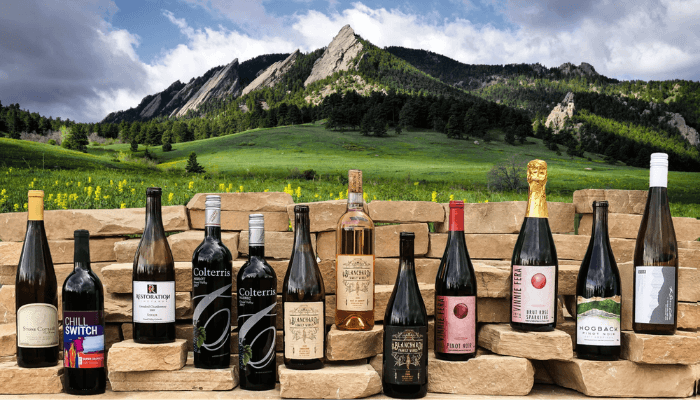
Colorado’s wine industry remains small, but its geography may become increasingly important in a warming climate. The Grand Valley AVA and West Elks AVA contain some of North America’s highest commercial vineyards, with many planted above 4,000 feet. High elevations create a unique balance between intense sunlight during the day and cool nighttime temperatures that preserve structure and acidity. Producers such as BookCliff Vineyards, Carlson Vineyards, Colterris Winery, The Storm Cellar, and Sauvage Spectrum are building reputations for Albariño, Riesling, Cabernet Franc, Petit Verdot, and skin-contact wines.
The Storm Cellar has gained national attention for textured white wines and natural-leaning bottlings that showcase Colorado’s freshness and precision. Unlike older wine regions shaped by rigid expectations, Colorado’s producers often feel free to experiment with unconventional grape varieties and fermentation styles. Climate researchers increasingly argue that altitude may become as important as latitude in future viticulture. Colorado’s mountain vineyards position the state as an important testing ground for climate-adaptive winemaking.
Source: Casa Rondeña Winery
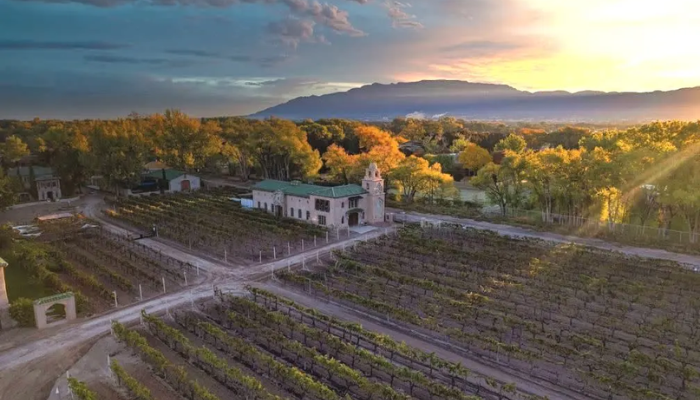
Long before Napa Valley became internationally famous, wine grapes were already growing in New Mexico. Spanish missionaries planted vines along the Rio Grande in the seventeenth century, making the state one of America’s oldest wine regions. Today, New Mexico’s Middle Rio Grande Valley AVA, Mesilla Valley AVA, and Mimbres Valley AVA are benefiting from renewed interest in high-elevation desert viticulture. Dry conditions reduce disease pressure while altitude helps preserve freshness. Gruet Winery helped reshape perceptions of the region through traditional-method sparkling wines, while Vara Winery & Distillery, Casa Rondeña Winery, and Vivác Winery are driving broader quality improvements.
Arizona is experiencing a similar rise. The Sonoita AVA and Willcox AVA are increasingly respected for Rhône and Italian grape varieties suited to warm but elevated desert climates. Producers including Caduceus Cellars, Dos Cabezas WineWorks, Arizona Stronghold Vineyards, Rune Wines, and Sand-Reckoner are embracing the Southwest’s harsh conditions rather than attempting to imitate California. The desert Southwest may ultimately become one of America’s most important laboratories for climate-adaptive viticulture.
Source: The Rockettman
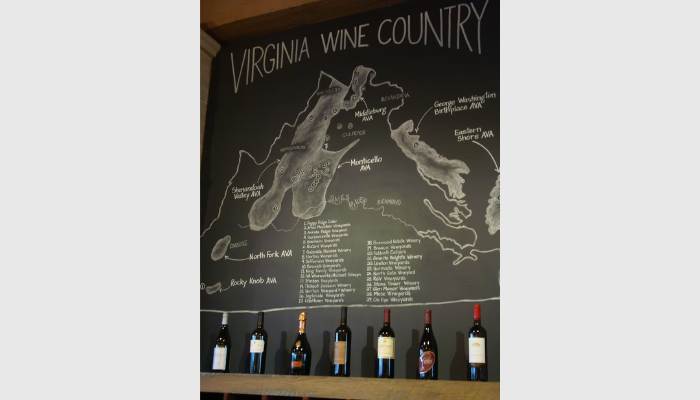
One of the clearest signs of change is the growing number of AVAs appearing outside traditional prestige regions. The American Viticultural Area system once reinforced California’s dominance, but it increasingly validates emerging terroirs across the country. Recent momentum around the Lamorinda AVA in California’s East Bay, sub-regional proposals in Texas, Virginia’s Monticello AVA, Oregon and Washington’s Columbia Gorge AVA, and Missouri’s historic Augusta AVA reflects a rapidly diversifying industry. The Columbia Gorge AVA has become especially notable because producers such as Analemma Wines, Syncline Winery, Savage Grace, and Loop de Loop Wines are experimenting with everything from Pinot Noir to Nebbiolo and Mencía. Virginia is also gaining momentum through wineries, including Barboursville Vineyards, Linden Vineyards, Early Mountain Vineyards, and RdV Vineyards, many of which are finding success with Cabernet Franc and Bordeaux-style blends adapted to Mid-Atlantic conditions. Even hybrid grapes such as Marquette, Chambourcin, Frontenac, and Petit Pearl are gaining respect because they tolerate unpredictable weather and require fewer chemical treatments than traditional European varieties.
American wine is entering a period of reinvention shaped by climate, geography, and changing consumer expectations. The industry is no longer centered around a single region or winemaking philosophy. Instead, momentum is spreading across cooler northern states, volcanic valleys, desert plateaus, and high-altitude vineyards where producers are experimenting with grapes and styles better suited to modern conditions. What makes these emerging regions compelling is not just novelty, but individuality. From mineral-driven Rieslings in the Finger Lakes to Mediterranean varieties in Texas and sparkling wines from Michigan, each region is building an identity rooted in its own landscape rather than imitation. That shift is gradually redefining how American wine is perceived both domestically and internationally. The most exciting part of this transformation is that many of these regions are still evolving. Their styles are less rigid, their producers more experimental, and their wine cultures more open to change. As climate patterns continue to reshape global viticulture, America’s next defining wine region may come from a place that, until recently, barely appeared on the map.
Header image source: Condé Nast Traveler
Also Read:
How USA Wine Ratings Helps Wineries Reach U.S. Retail Buyers
Wine or Something Else? Why the “Wine Alternatives” Debate Is Really About Identity
Forthright Winery: Crafting Award- Winning Napa Cabernet with Boutique Precision
2026 USA Wine Ratings Winners Announced. Congratulations to all the winners!